

By Ankur Singh, Founder, CEO & Editor, SylphCorps Media
India’s Unified Payments Interface is, by a wide margin, the world’s largest real-time payments system — bigger than most people assume, and bigger than the Western wallets it usually gets compared to. In the financial year ending March 2026, UPI processed 24,161.69 crore transactions (about 241.6 billion) worth ₹314.23 lakh crore, or roughly $3.56 trillion, per NPCI data published via IBEF, a Government of India trade-promotion body, up 30% in volume year-on-year, according to a Ministry of Finance press release. It carries 85% of India’s digital payment volume and, as of June 2026, had 55.49 crore (554.9 million) registered users, per a written reply from the Minister of State for Finance in the Lok Sabha.
Scale alone doesn’t explain much, though. What’s worth unpacking is the design decision underneath that number, because it exposes a limit in how Apple Pay and Google Pay are built — one that isn’t really about technology at all.
How UPI’s Architecture Differs From Apple Pay and Google Pay
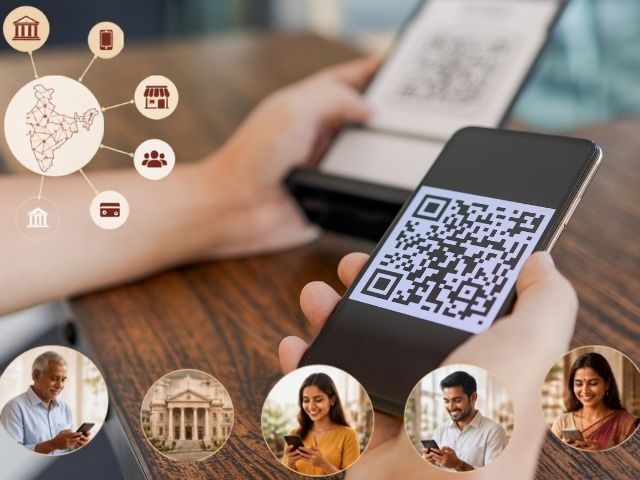
UPI isn’t a wallet, it’s a rail — a public, interoperable protocol run by the National Payments Corporation of India (NPCI), a not-for-profit operating under Reserve Bank of India oversight. Any bank, any licensed app — PhonePe, Google Pay India, Paytm, and a long tail of smaller ones — plugs into the same system, and a payment sent from one app lands in the recipient’s bank account regardless of which app they’re using. There’s no walled garden here. More than 700 banks are now live on the network, according to NPCI figures cited by the Ministry of Finance.

Two decisions made that work at national scale. Interoperability wasn’t something banks could opt out of — it was mandatory from the start. Apple Pay, and Google Pay everywhere outside India, took a different path: they sit on top of existing card rails, essentially tokenizing a card you already own. That’s a perfectly reasonable product decision, but it also means you need a bank-issued card before either wallet does anything useful for you. Google Pay’s own Indian app is the exception that proves the point — it runs on UPI directly, linking your bank account through your registered mobile number and an OTP, no card involved at all. Even Google concluded that its card-wallet model couldn’t compete with UPI’s account-based one in the one market where it had to. UPI just needs a bank account and a phone number, which is a considerably lower bar than the card-dependent version Apple Pay is still built around.
The second decision was about cost. India zeroed out the merchant discount rate (MDR) on UPI transactions in January 2020, largely to get small merchants on board — the same vendors who’d never absorb the 1-3% fees card networks typically charge. A vegetable stall can accept payment through a ₹10 printed QR sticker. No terminal, no per-transaction fee, no minimum volume commitment.
Worth flagging honestly, since this is a fast-moving area: Parliament passed the Taxation and Other Laws (Amendment) Bill, 2026 on August 10, and it’s since become law — President Droupadi Murmu gave her assent on August 17, 2026, according to Press Trust of India. The Act amends the Payment and Settlement Systems Act, 2007 to give the government legal backing to modify the zero-MDR framework by notification — it doesn’t itself impose a fee. Media reporting has floated a merchant fee targeting large merchants above an estimated ₹1-1.5 crore annual turnover, on individual transactions above ₹2,000, Forbes India reported, though the government has not yet gazetted an exact rate or threshold. Consumers and peer-to-peer transfers are explicitly staying free either way. Call it a correction rather than a reversal — the inclusion logic hasn’t really changed, just who eventually absorbs the cost of running it at the very top end of the merchant base.
The pressure behind that change is real. Payment companies have put the UPI ecosystem’s annual operating cost at roughly ₹20,700 crore, against a government subsidy of only ₹2,000 crore — covering about a tenth of the actual bill, according to a Parliamentary Standing Committee on Finance report tabled in August 2026. The Finance Ministry has told the panel it is weighing two paths: restoring MDR on high-threshold transactions, or a tiered incentive structure that phases out government support entirely over the next few years. Either way, someone besides the exchequer eventually pays for the infrastructure — the debate is only over who and how much.
The Closed-Loop Limits of Apple Pay and Google Pay
None of this makes Apple Pay or Google Pay bad products. Security is genuinely strong, and for someone who already has a card, the experience is close to seamless. But there’s a structural ceiling built into the design: neither wallet can be more inclusive than the card system sitting underneath it. UPI doesn’t run into that ceiling, mostly because no single company can gatekeep it, and because a bank account clears a much lower bar than a credit history and a card ever will.
That structural gap isn’t abstract — it’s playing out in real time. Apple’s own country and region availability page still doesn’t list India, and Apple Pay isn’t available there at all today. An Economic Times report covered by MediaNama said Apple was targeting an October 2026 launch with card payments first — but since Apple hasn’t confirmed that date publicly, it’s best treated as a reported target rather than a scheduled launch. NPCI approval and a sponsor-bank partnership for UPI integration reportedly remain pending, and Apple is said to be negotiating an interchange fee of 15-20 basis points with Indian banks, who have countered at roughly 10 basis points. Even on that timeline, a card-only debut would offer a narrower acceptance path than the UPI QR network merchants already accept for free, with no card required at all.
UPI’s International Expansion: From India to Ten Countries
UPI now runs in ten countries — Singapore, the UAE, Bhutan, Nepal, Sri Lanka, Mauritius, Qatar, France, where it launched, a little improbably, at the Eiffel Tower to serve Indian tourists, Cambodia, which came onboard in June 2026 through a tie-up between NPCI International and ACLEDA Bank covering more than 4.5 million merchants, per the Ministry of Finance, and Greece, where a UPI-based inward remittance service — not a retail merchant QR network like Cambodia’s — went live on June 30, 2026 through a partnership between Eurobank and NPCI International, the first such link by a bank in southeastern Europe, Commerce Minister Piyush Goyal said. Talks are reportedly underway with Japan, Malaysia, and Bahrain for further expansion.
The logic for remittances is straightforward. The World Bank’s own Remittance Prices Worldwide database put the global average cost of sending money home at 6.36% in the third quarter of 2025 — and non-digital channels, the kind most diaspora workers still rely on, averaged 7.30%. A UPI-linked corridor, by contrast, settles near-instantly between bank accounts at a fraction of that.
What Apple Pay and Google Pay Can Actually Learn From UPI
Regulators in the US or EU aren’t going to import UPI wholesale — the underlying infrastructure (Aadhaar-linked bank accounts, a state-run non-profit operator, a regulator that can authorize MDR changes by legislation) doesn’t map cleanly onto a card-network-centric payments history. But the principle underneath it does travel: a payments system built as neutral infrastructure ends up reaching further into the unbanked and small-merchant economy than one built as a feature of somebody’s phone. Apple Pay and Google Pay optimized for the banked. UPI optimized for everyone else first, and the banked came along anyway.