

1. Digital wallets are increasingly enabling hyper-personalized financial experiences. What does that personalization actually look like in practice, and how far can it realistically go?
- Hyper-personalization goes beyond recommending products based on past behavior. By bringing together context such as spending patterns, financial goals, cash flow, and transaction activity, digital wallets can become increasingly predictive, helping consumers make better financial decisions in the moment. For example, recommending the most suitable payment option for a purchase, highlighting opportunities to maximize value from rewards, or identifying ways to put idle cash to work. The opportunity is significant, but personalization will only create lasting value if consumers clearly understand how their data is being used and remain in control of the experience, enabling them to make informed choices.
2. Banks and Big Tech are both competing for a bigger role in the digital wallet experience. Who do you think has the natural advantage right now, and why?
- Both banks and big tech have natural advantages to offer in the digital wallet experience. Banks possess something incredibly valuable: deep customer relationships, rich financial data, and the trust that comes from operating in a highly regulated industry. They also benefit from decades of experience navigating evolving regulatory complexity and risk environments.
Big tech, on the other hand, has largely leapfrogged legacy technology challenges and excels at creating intuitive, seamless digital experiences that drive engagement at scale.
Rather than a winner-takes-all battle, the bigger opportunity lies in collaboration. The future of digital wallets will be shaped by organizations that combine the trust, data, and financial expertise of banks with the innovation, agility, and user experience strengths of technology providers.
3. You’ve said the winners will be providers who combine seamless personalization with trust, security, and regulatory rigor. Is there an inherent tension between “seamless” and “secure,” and how should institutions balance the two?
- There can be tension between seamless and secure, but the best payment experiences make security part of the convenience rather than an added layer of friction. Strong authentication, advanced fraud prevention, and robust governance should increasingly operate behind the scenes, allowing customers to transact with confidence and minimal disruption. As agentic payments become more prevalent, maintaining that balance will become even more important. The institutions that earn trust will be those that make security virtually invisible, while keeping customers safe, informed, and in control.
4. As payments become more digital and fraud more sophisticated, what role will AI-driven automation play in identifying threats in real time?
- AI will increasingly serve as a first line of defense against financial crime, analyzing transactions alongside contextual signals such as spending patterns, location and device activity to identify suspicious behavior in real time. That broader context can help institutions detect sophisticated fraud while reducing false positives for legitimate customers. As fraudsters adopt AI to increase the scale and sophistication of attacks, the advantage will belong to those financial institutions that continuously learn, adapt, and respond effectively to emerging threats.
5. In your experience, how has banks’ approach to digital transformation changed over the last five years?
- Banks’ approach to digital transformation has largely shifted from viewing technology as an enabler to leveraging it as a growth catalyst.
Earlier digital transformation efforts focused on automation, cloud adoption, and process digitization, all aimed at improving operational efficiency.
Today, the focus has shifted to leveraging data, AI, and ecosystem partnerships to deliver business outcomes. The biggest change has been the recognition that context is king. Institutions are increasingly using AI to better understand the customer, transaction, and business context in real time, enabling more relevant experiences, better decisions, and stronger business outcomes.
6. With over 20 years in financial services and digital transformation, what’s a common mistake you still see institutions make when adopting new payment technology?
- A common mistake I still see is organizations focusing on technology before confirming that it solves a meaningful customer or merchant need. A new payment method can be innovative, but if it adds friction, is difficult to scale, or fails to deliver clear value, adoption will remain limited.
When evaluating new payment capabilities, I often come back to a simple test: do consumers and businesses truly CRAVE it? Does it improve Convenience, expand Reach, drive Adoption, generate meaningful transaction Volume, and improve Efficiency? Institutions should evaluate market readiness, usability, security, and business value across these dimensions from the outset, rather than treating adoption as a challenge to solve after launch.
7. Looking at the next few years, do you think consumers will notice AI-driven fraud prevention working — or will its success be defined by staying invisible?
- In many ways, the most successful fraud prevention will be invisible to consumers. They are more likely to notice when the system fails, whether that means fraud gets through or a legitimate transaction is unnecessarily blocked. AI’s real value will be in continuously improving that balance, protecting customers more effectively while reducing the friction and false positives that interrupt the payment experience.
8. What’s one shift in digital banking or payments that you believe is currently underappreciated by the industry?
- The next frontier in payments will be less about speed and more about relevance. Payments are increasingly becoming context-aware and predictive, with AI potentially helping consumers compare options, optimize outcomes, and eventually initiate transactions.
I also expect experiences to become far more interactive, allowing consumers to engage with their financial institutions in natural ways to better manage spending, plan toward financial goals, and discover personalized recommendations that are relevant to their circumstances.
Agentic payments represent a natural extension of this evolution, although widespread adoption will depend on consumers developing sufficient trust in AI to act safely on their behalf and avoid unintended outcomes.
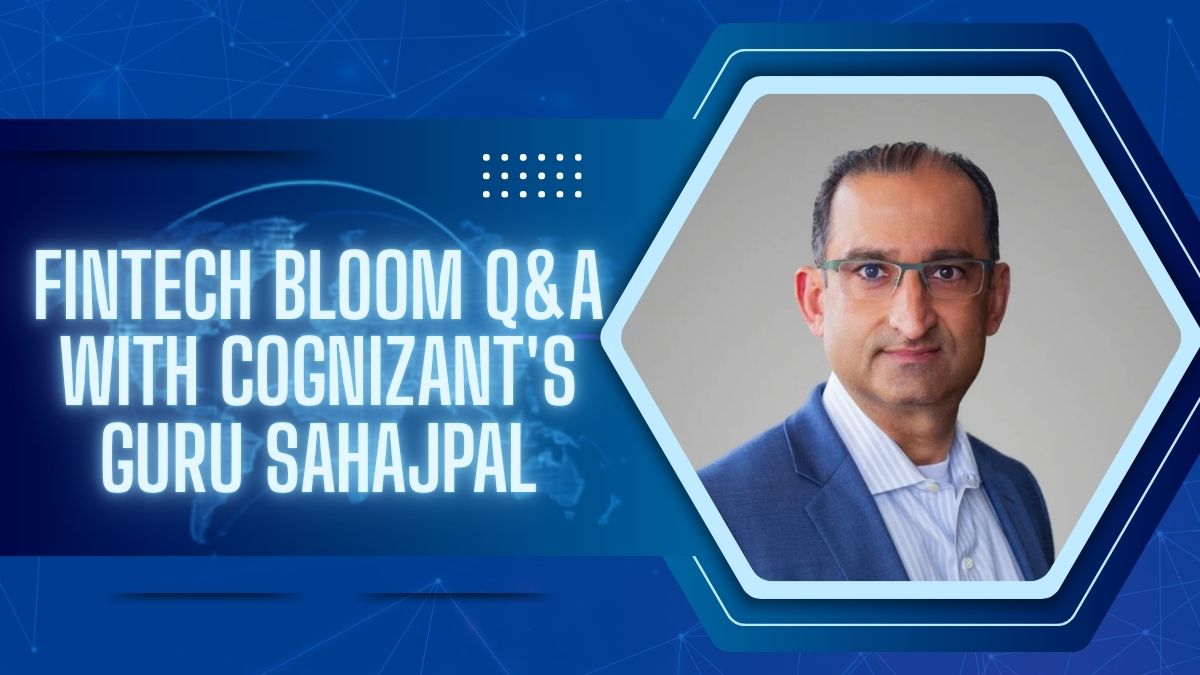
About Guru Sahajpal
Guru Sahajpal is AVP of Banking and Financial Services at Cognizant, where he helps strengthen the company’s market presence and leads go-to-market efforts across industry offerings, partnerships and alliances. He brings more than 20 years of experience in financial services, digital transformation, client strategy and operational improvement.
Prior to joining Cognizant in 2021, Guru held senior leadership roles at Wells Fargo, KPMG, Deloitte and Infosys, working with retail and commercial banks and other financial institutions. His areas of expertise include digital and intelligent automation, operating model transformation, cost optimization and customer experience.