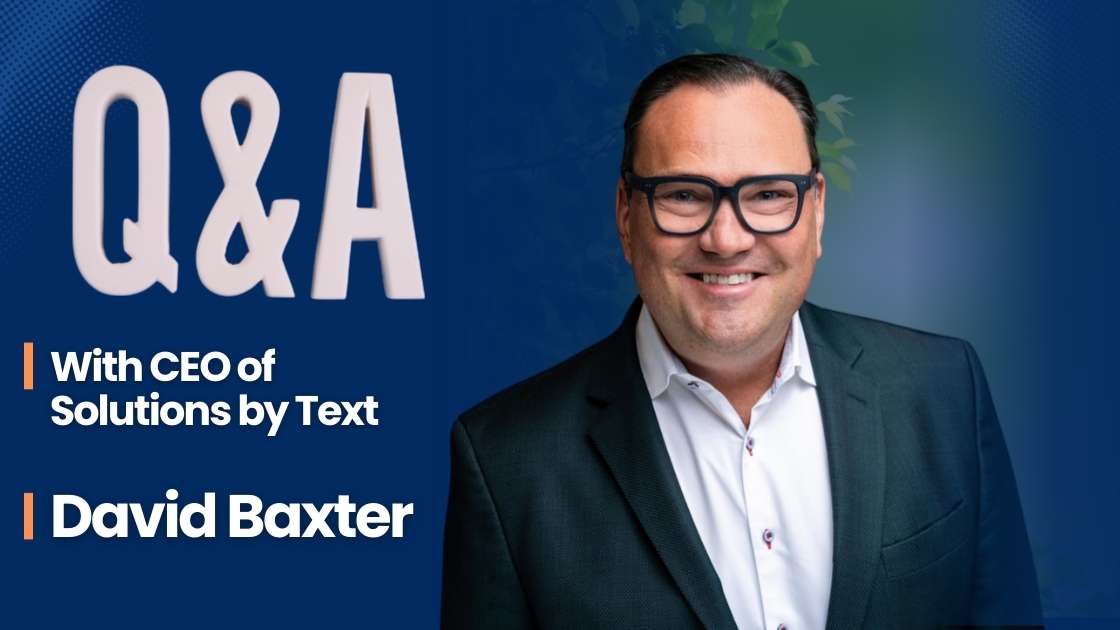
Q&A with David Baxter, CEO of Solutions by Text
1. Many consumers say they plan to use tax refunds to pay down debt, but their behavior often diverges once the money hits their accounts. What does the data show about how different age groups use refunds, and where do intent and action break down?
We find that most people say they want to use refunds to achieve solid financial goals, but behavior gets more complicated once the money arrives. The National Retail Federation, for example, finds that 52% of consumers say they plan to save their refund, 32% plan to use it to pay down debt, and about 30% plan to cover everyday expenses like groceries and utilities.
But in the first few weeks after the refund hits the account, things can begin to break down. Data from the Bank of America Institute shows that some households increase spending by nearly 40% in the weeks after receiving a refund, and most of that spike is for necessities and small, everyday items. If actually paying a balance requires remembering that a particular balance needs repayment, finding a letter, calling a number, sitting on hold, or logging into a portal and resetting a password, that good intention to “use this refund for debt” gets pushed aside by the realities of daily life.
We’ve seen that directly with SBT customers: one national collections agency doubled self‑service digital payments from 20% to over 40% after moving from calls and letters to compliant SMS with smart payment links, because they made it easy for people to act on their intention to pay in the exact moment when the refund was sitting in their account.
2. Why is tax season emerging as a distinct “recovery window” rather than just a bump in overall payment volume, and what makes this period structurally different from the rest of the year for lenders and servicers?
Tax season differs because of how much cash hits households, how fast it arrives, and what people intend to do with it. IRS data and outside forecasts suggest that total refunds this year will be in the mid‑$300‑billion range, with roughly $60–$90 billion more refund cash flowing into households once the season is done than last year. That’s not just a small lift in liquidity—that’s a temporary shock wave that can move cure rates, roll rates, and loss curves if you capture it.
The timing is also compressed. Historically, the bulk of refunds arrive within roughly 8–10 weeks, and early‑season reports from the IRS show well over $100 billion already paid out by late February, with many more billions to come before the April deadline. You don’t see that kind of synchronized cash event at any other time of year.
Add to this the intent we talked about earlier—NRF, Bank of America, and others showing a strong focus on savings, bills, and debt—and you have a window where consumers both have money and are mentally focused on fixing their finances. Outside tax season, lenders and servicers are fighting for a slice of monthly cash flow; during tax season, they’re fighting for a slice of a one‑time lump sum that may be gone within a few weeks. That makes it a true recovery window, not just a seasonal bump.
3. Traditional outreach has centered on phone calls, letters, and email. What specific frictions in those channels are causing lenders to miss high‑intent moments with younger, mobile‑first borrowers during tax season?
Phone calls, letters, and emails are slow. But more importantly, they don’t match how younger borrowers actually manage their money. Collections teams know that phone calls have been losing effectiveness for years, especially with younger customers who don’t answer unknown numbers. Even when someone does pick up, the call happens on the collector’s schedule, not when customers are looking at their account and thinking, “I should take care of this while my refund is here.”
Email has a different problem. It waits for the borrower to check it, dig through a cluttered inbox, click a link, remember or reset a password, and then manually enter payment details. That’s a lot of friction for someone glancing at their balance on their phone between shifts. A tax‑season message that lands in an inbox on Friday might not be opened until Tuesday, by which time the refund may have already been spent.
Letters are the slowest of all. A letter mailed when the refund is issued might not arrive for several days, and then you still rely on the borrower to open it, read it, type in a URL, or call a number, and go through a multi‑step process. Every one of those steps is a drop‑off point.
We’ve seen a much better way to tackle this issue: one of our clients cut non‑FDCPA letters by 45% and doubled self‑service digital payments after shifting from letters to compliant SMS with smart links. In other words, cutting the friction allows borrowers to make good on their repayment intent in the brief window after refunds hit.
4. How do mobile‑native tactics like consumer‑elected reminder windows, MMS content, and one‑tap wallet payments change the timing and psychology of a refund‑driven payment decision from the borrower’s perspective?
It’s pretty straightforward. Mobile tactics move a decision from “I’ll deal with this later” to “I can take care of this right now.” If a customer can say “text me when my refund hits” and then get a reminder at that exact moment, guess what? Outreach is now a requested reminder, not a random, frustrating demand. That matters during tax season—if you wait a week, the money is often already spoken for.
MMS and clear visuals also make it easier to act. Instead of a vague “you owe a balance,” the borrower sees a clean snapshot of what they owe, any options (settle in full, set up a plan), and a simple tap to act. They don’t have to leave the message thread to look up details or second‑guess whether it’s legitimate.
One‑tap digital wallet payments similarly reduce the final barrier. Instead of logging into a portal and entering card numbers, the borrower taps a secure link, authenticates with Face ID or their fingerprint, and they’re done. The psychology is simple—if paying is as easy as responding to a text, more people will actually follow through on what they said they wanted to do with their refund.
5. “Cart abandonment” is a familiar concept in e‑commerce. What does the equivalent look like in loan servicing and account resolution, and how can financial institutions design journeys that recover dropped IVR calls, abandoned portals, or half‑completed payment flows?
In our world, “cart abandonment” shows up as dropped IVR calls, abandoned portal sessions, and broken promise‑to‑pay plans. Someone dials into an IVR, gets through a couple of menus, sits on hold, and then hangs up. Or they click a payment link, hit a login screen, can’t remember their password, and never come back. Or they agree to pay Friday, but the reminder email gets buried, and Friday comes and goes.
The pattern is the same as e‑commerce: intent was there, but friction got in the way. The fix is to treat every drop‑off as a trigger for an immediate, simpler recovery path. If an IVR call drops, you send a text within minutes: “We saw you called about your account—tap here to pay or schedule a callback.” If a portal session stalls, you follow up with a smart link that lets them authenticate in one step and pick up where they left off or pay as a guest via a wallet.
6. Two‑way messaging during a sensitive financial conversation raises questions about tone, compliance, and control. What practical guardrails and operating models should lenders have in place if they want to use text or chat for back‑and‑forth tax‑season engagement?
Two‑way messaging is powerful, but it has to sit on top of a solid compliance infrastructure. First, you need clear consent and opt‑out management—only text people who have given proper consent, and make sure “STOP” and similar commands are honored immediately and logged. In collections contexts, you also need to ensure that your templates and agent responses align with FDCPA, CFPB, and state rules; that means no threatening or misleading language, clear disclosures, and good records of every interaction.
Operationally, I think striking the right balance between automation and experienced human oversight is important. Some things tend to be routine—reminders, confirmations—but anything more nuanced calls for, well, nuanced communication.
Tone really matters as much as the rules. Messages should be simple, direct, and respectful rather than dense or legalistic. When you get it right, you reap the benefits of real‑time, two‑way conversations during tax season without the risk of alienating customers.
7. Looking ahead to the next 2–3 tax seasons, how might data, automation, and AI reshape refund‑season strategies, and what are one or two concrete steps credit and servicing teams can take now to prepare without over‑promising or over‑personalizing?
Over the next few tax seasons, I expect the big shift to be from generic tax‑season campaigns to precisely-timed journeys. Teams will use data—filing behavior, deposit patterns, past tax‑season payments—to predict when refunds are likely to land and which borrowers are most likely to pay if you reach them in that window. Instead of “Tax refunds are coming” blasts, you’ll see more “Your refund’s arriving—here is a simple way to clear this balance” messages, delivered within hours of actual deposit.
AI will sit behind the scenes, helping decide who to contact, when, and with which offer, but it must stay inside clear guardrails. That means using AI to suggest next‑best actions, test different templates, and flag risky language—not to write completely free‑form messages or to make potentially offensive, over‑specific references to someone’s spending. It also means being honest about what you can and can’t predict; for example, you can estimate refund timing, but you shouldn’t promise exact deposit dates that you don’t control.
If I were advising a team today, I’d suggest it focus on applying AI to see and understand patterns and trends in customer behavior. Then use that insight to inform targeted campaigns that will help achieve the business outcomes you’re looking for.