

By Hartley Thompson III, CEO of Microblink
For years, digital identity in financial services operated on a relatively simple assumption: verify someone once, trust them afterward. That assumption, however, no longer holds.
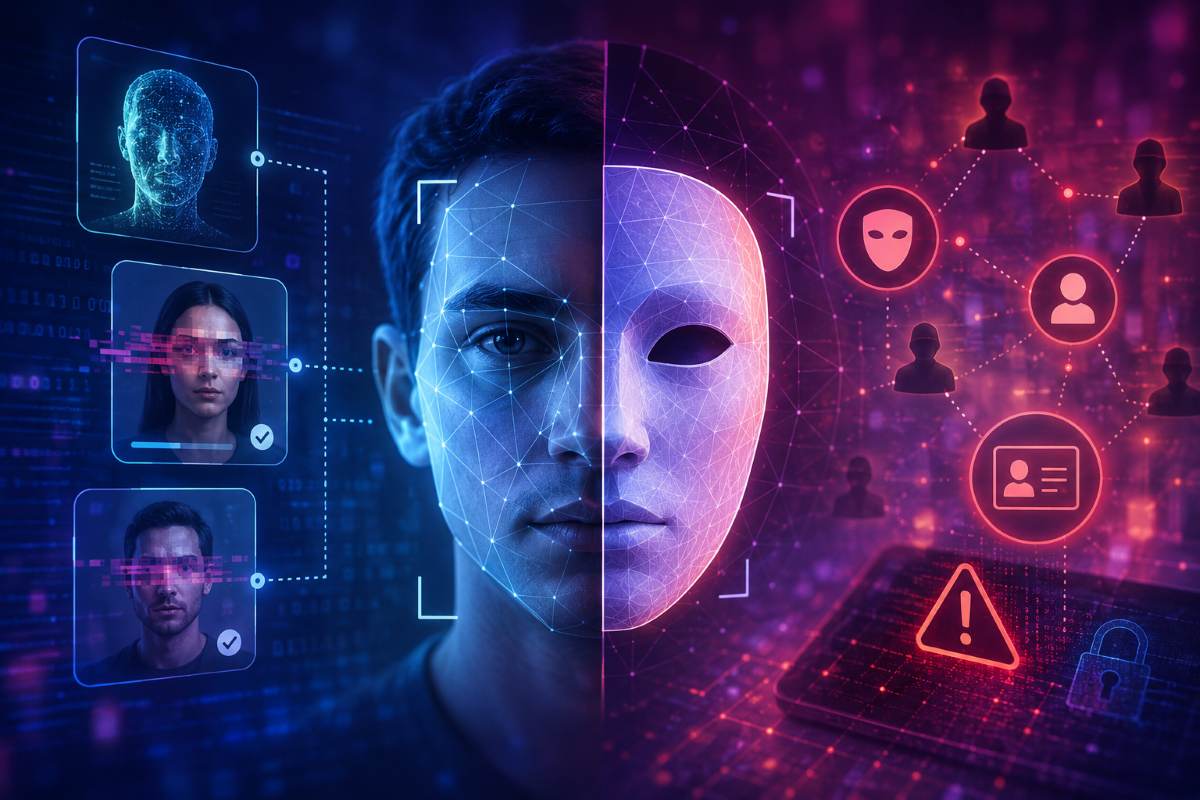
Deepfakes, synthetic identities, and AI-generated fraud have fundamentally changed the economics of fraud across banking, fintech, payments, and digital commerce. What once required specialized expertise, organized criminal infrastructure, or significant financial investment can now be done with widely available generative AI tools.

Fraud has become faster, cheaper, and dramatically more scalable. More importantly, it has become continuous. This is the shift many financial institutions and fintech platforms still underestimate. The challenge is no longer simply verifying whether a document or selfie is authentic during onboarding. The real challenge is determining whether the entity interacting with your platform, initiating a payment, opening an account, or moving money, remains legitimate over time.
Identity is no longer a static event. It is becoming a continuous system for evaluating trust.
Deepfakes and Synthetic Identity Fraud Are Converging
Deepfakes and synthetic identities are often discussed as separate threats, but in practice they are rapidly converging into a single operational problem for banks, fintechs, lenders, and payment providers.
Synthetic identity fraud traditionally relied on assembling fragments of real and fabricated information to create a believable but ultimately fake person. That process once required significant effort and coordination. Generative AI has changed that completely.
Fraudsters can now create realistic identity documents, AI-generated biometric spoofs, fake supporting documentation, and convincing digital personas in minutes. The result is a new category of fraud that is not merely forged in the traditional sense but manufactured from scratch.
Unlike traditional fraud operations, these attacks scale almost infinitely. Once a successful workflow is identified, it can be automated, replicated, and distributed globally with extraordinary speed. This is already reshaping fraud ecosystems across digital banking, embedded finance, BNPL platforms, crypto exchanges, neobanks, and peer-to-peer payment systems.
The financial impact is significant. Synthetic identities can remain dormant for months or even years, slowly building creditworthiness and transaction history before eventually being used for account takeover, loan fraud, payment fraud, or coordinated cash-out schemes.
Why Traditional Identity Verification Models Are Failing
Most identity systems still operating today were built for a very different era of fraud. They were designed around isolated moments such as onboarding, login, or high-risk transactions. The assumption was that once a customer passed verification, trust could largely persist afterward.
But AI-driven fraud no longer operates in isolated moments.
Accounts evolve over time. Sessions become compromised. Synthetic identities mature gradually. Fraudsters repeatedly probe systems until they discover weaknesses in detection logic, workflows, or recovery processes. Static verification models create dangerous blind spots because they treat trust as binary: verified or not verified.
For financial institutions, this creates a growing operational challenge. Fraud risk no longer exists only at onboarding. It exists throughout the entire customer lifecycle, from login and payment authorization to wire transfers, account recovery, and delegated access.
The Rise of Continuous Identity Verification
This is why the financial and fintech industry is increasingly shifting toward continuous identity verification models. Instead of evaluating identity once, organizations now need to continuously assess whether an interaction remains trustworthy throughout the customer lifecycle.
This includes analyzing signals such as:
- behavioral patterns
- device trust and posture
- biometric consistency
- contextual risk
- session integrity
- transaction intent
Importantly, this shift is not about introducing more friction into financial experiences. In many cases, continuous identity systems reduce friction by allowing organizations to apply controls dynamically as risk changes. Legitimate customers move seamlessly through a platform, while suspicious interactions trigger additional scrutiny only when necessary.
This becomes especially important in competitive fintech environments where user experience directly impacts conversion, retention, and revenue. The organizations that succeed will not be those that simply add more controls. They will be the ones capable of applying trust intelligently and continuously.
Deepfake Detection Is Becoming Foundational Infrastructure
Furthermore, deepfake detection is rapidly evolving from a niche capability into core financial infrastructure.
For years, biometric verification focused primarily on proving liveness or matching a face to an identity document. Those capabilities remain important, but they are no longer enough on their own. Organizations must now determine whether an image, video, or document was synthetically generated in the first place.
This requires layered analysis across biometrics, identity documents, device signals, and behavioral intelligence. It also requires systems that can adapt quickly as generative AI models evolve.
The challenge is no longer simply catching today’s attacks. It is building systems capable of evolving fast enough to recognize entirely new attack methodologies tomorrow. That is where many legacy approaches begin to break down.
This is particularly critical in financial services because fraud now moves at machine speed. AI-generated attacks can target onboarding flows, payment systems, lending workflows, and account recovery channels simultaneously and at scale.
AI Agents Are Expanding the Threat Surface Even Further
The next phase of this problem is even larger.
Increasingly, financial interactions and transactions will not be initiated directly by humans. They will be initiated by AI agents acting on behalf of users. Current identity and authorization systems were never designed for actors that can replicate themselves, inherit permissions, operate autonomously, or be manipulated dynamically.
The industry must now move beyond “Know Your Customer” toward a broader concept: Know Your Actor. The question is no longer simply who the customer is. The question is who or what is acting at a given moment, on whose behalf, and with what level of authority.
That shift will reshape fraud prevention, authentication, authorization, and digital trust architecture across financial services over the next decade.
As embedded finance, agentic commerce, and AI-powered financial assistants continue to grow, the distinction between user identity and actor identity will become increasingly important.
Why Explainability and Control Matter More Than Ever
As AI becomes more deeply integrated into financial identity systems, explainability is becoming critically important.
Many organizations are rushing to apply generative AI and large language models into fraud workflows without fully considering operational realities such as inconsistent outputs, hallucinations, lack of auditability, or non-deterministic behavior. In regulated financial environments, fraud decisions cannot simply become black-box outcomes.
Banks, fintechs, and payment providers increasingly need explainable, repeatable, and controllable systems, especially as regulators intensify scrutiny of governance, bias, model accountability, and ongoing monitoring obligations.
The future of identity is not about replacing trust systems with black-box AI. It is about building intelligent systems capable of integrating automation, explainability, and continuous risk evaluation.
Identity Is Becoming the Operating System for Financial Trust
The broader shift underway is this: identity is evolving from a compliance workflow into financial infrastructure.
It is becoming the control layer that determines who can access systems, who can transact, which payments are authorized, and whether behavior remains trustworthy over time. That transformation is accelerating because the attack surface itself is changing.
Deepfakes and synthetic identities are not isolated anomalies. They are early indicators of a much larger transition toward AI-native fraud ecosystems.
Financial institutions and fintech platforms that continue relying on static verification models will increasingly find themselves reacting to fraud after damage has already occurred. The organizations that succeed will be the ones that treat identity not as a one-time checkpoint, but as a continuous, adaptive system of trust.
Because in the age of AI-generated fraud, trust can no longer be assumed; rather, has to be continuously earned, evaluated, and defended.