

By Arun Kini, Managing Director, APAC, Payments, Finastra
Instant payments have become a baseline expectation. Banks across the world recognize that
customers, whether retail or corporate, now assume money should move as fast as information, around the clock and without friction. That shift is redrawing the market. As volumes climb worldwide, a Juniper Research report has found that the conversation is moving away from raw speed towards interoperability, intelligence, and customer experience. The scale behind that shift is hard to ignore.
The global transaction value of instant payments is expected to exceed $129 trillion by 2030 according to research by Capgemini. Yet that growing value acceleration has exposed a readiness gap, because most banks remain seriously underprepared. As payment networks grow more connected, interoperability and intelligent routing is becoming a key enabler of delivering real-time payments reliably and at scale.

Instant payments are going global
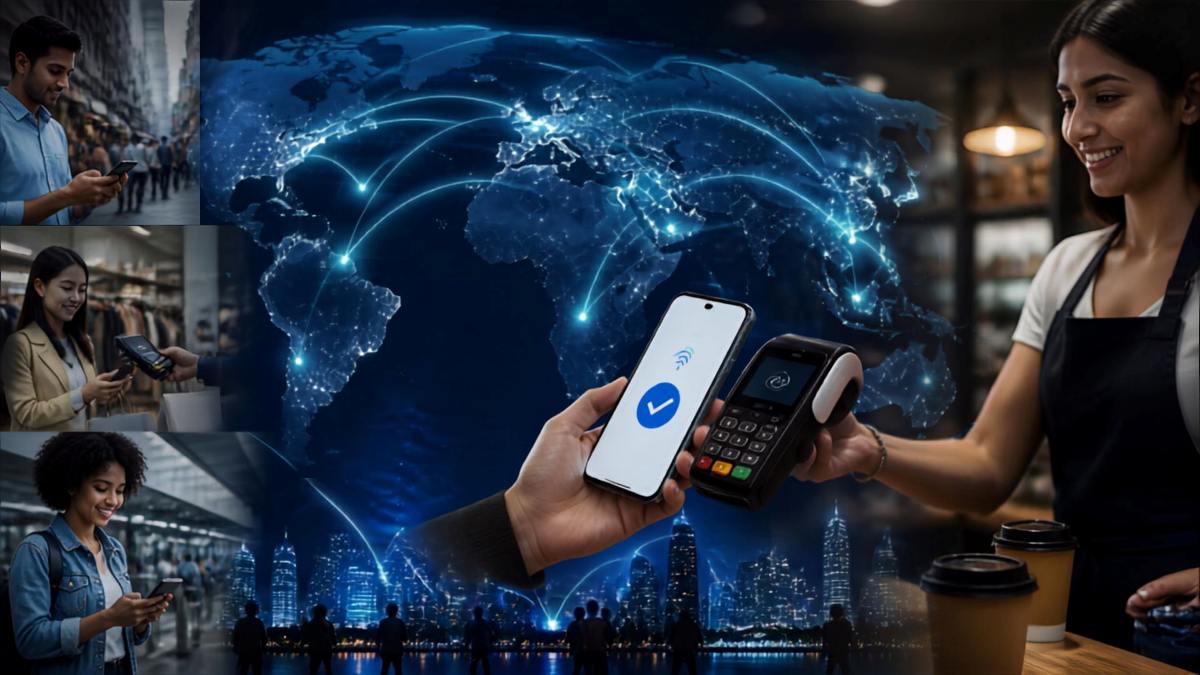
The expectation is for instant cross-border connectivity. Domestic schemes have already proven what real-time can do, and India’s Unified Payments Interface (UPI) is the clearest example of the scale and value that account-to-account payments reach when speed, certainty, and low cost come together to deliver customer value. A question that is now often asked is how to extend that value across borders.
Getting there depends on connecting ecosystems that grew in isolation, and interoperability is advancing through several complementary models. Bilateral links join two schemes directly. Regional hubs standardize messaging and settlement across a group of countries. Global frameworks such as Project Nexus act as a network of networks.
The G20’s push to interlink fast payment systems pulls in the same direction, adding momentum to work that individual markets could not accelerate on their own. For businesses and consumers, the payoff is concrete. Cross-border instant payments shorten settlement times, add transparency to where a payment sits at any moment, and give both corporates and individuals far superior control over cashflow.
UPI and the future of global payments movement
UPI is arguably becoming a blueprint for the future of cross-border instant payments. In India, it has already reduced volumes across cash, cheques, and even cards in many sectors by making account-to-account transfers instant, low-cost, and reliable. That value has come from driving efficiency where cash flow, speed, and certainty matter most, backed by strong government support and a clear need to bring unbanked and underbanked people into the financial system and achieve financial inclusion across the strata of the society.
The result is a real-time rail that millions of businesses and consumers now treat as the default. The same model is now expanding beyond India through international interoperability and payment corridors that link UPI to other domestic schemes, so money can move between markets in real time. For banks, that opens a direct opportunity: use UPI-connected corridors to support faster, lower-cost remittances and cross-border instant payments, and to compete in flows that were slow and expensive under traditional correspondent models.
UPI’s next phase is not only about domestic scale but about becoming a global blueprint for a real-time payments network. As banks pursue faster, lower-cost cross-border transactions, UPI-linked corridors, interoperability, and modern payments hub architectures are emerging as critical enablers of real-time remittances and account-to-account payments.
I have seen this play out. A Tier 1 European bank we worked with has launched the region’s first real-time payment service from Greece to India. The recent launch of UPI in Greece extends the platform’s international footprint to 10 countries, with UPI also accepted in Singapore, the UAE, France, Mauritius, Nepal, Bhutan, Qatar, Sri Lanka, and Cambodia.
Helping our client become the first bank in the region to offer real-time money transfers from Greece to India is a huge milestone, giving them leadership in the market. It opens new revenue opportunities and strengthens the bank’s position in the remittance market. Just as importantly, it shows how modern payment infrastructure can accelerate innovation and shorten time to market, turning a new cross-border corridor into a live service rather than a multi-year build.
AI and the next stage of instant payments
AI has become essential to support emerging compliance mandates, sanctions screening, and fraud prevention requirements, delivering instant payments safely and efficiently. Because instant payments are fast and irrevocable, there is little room for manual intervention, so generative AI models analyze transaction behavior at scale to flag anomalies and evolving fraud patterns while reducing false positives. The same intelligence interprets complex regulatory frameworks across jurisdictions and automates audit-ready reporting. This is especially valuable in cross-border flows where the rules multiply and the window to act decisively and accurately is wafer thin.
AI also enables smarter orchestration and routing. Intelligent routing evaluates each payment against cost, speed, scheme reachability, value date, correspondent chain, and regulatory obligations, then picks the best available route across rails at any given point of time. That turns a growing web of schemes into a single, achievable, and coherent decision rather than a manual one. The third area is operational efficiency and liquidity. Instant settlement compresses treasury decision windows, and AI-driven forecasting gives banks real-time visibility into cash positions so they can fund corridors accurately instead of over- or under-provisioning.
Building the infrastructure for the future
None of the above expectations work on old foundations. Monolithic, batch-based systems were built for limited operating windows and predictable volumes, and they are increasingly at odds with an always-on environment. The real challenge is not just volume but volatility, because instant payments spike at odd hours in response to payroll runs, flash sales, or a market event, and monolithic systems cannot adapt fast enough.
My advice to banks is to build for that reality with an API-first, microservices-based architecture. Decoupling each payment function, from authorization to fraud screening to settlement, lets banks scale specific services on demand, deliver upgrades with near-zero downtime, and introduce new rails without re-architecting the whole estate every time the market shifts. That is what turns modernization from a multi-year overhaul into steady, lower-risk progress.
The bigger prize is a unified, multi-rail platform on ISO 20022 foundations. A single architecture that brings mass, high-value, instant, and cross-border instant payments together, and speaks a common data language across schemes, is what makes interoperability, richer overlay services, and cleaner exception handling possible. The Tier 1 European bank we worked with built its Greece-to-India corridor on exactly this kind of modern infrastructure, which is why it reached the market in a fraction of the time a monolithic build would have taken.
Instant payments are fast becoming the default expectation across domestic and cross-border transactions, and connectivity, interoperability, reliability, and AI-powered intelligence will define the next generation of payment leaders. The banks that modernize their infrastructure now will be best placed to open new corridors, launch new services, and capture growth ahead. Instant payments between Europe and India are already delivering business value today, and they offer a glimpse of a future where global, intelligent, and always-on payments are simply the norm.