

By Bruno Pedras – Founder and CEO of Belmoney, a Belgian-licensed payment institution providing cross-border payment infrastructure to banks and fintechs across 130+ countries.
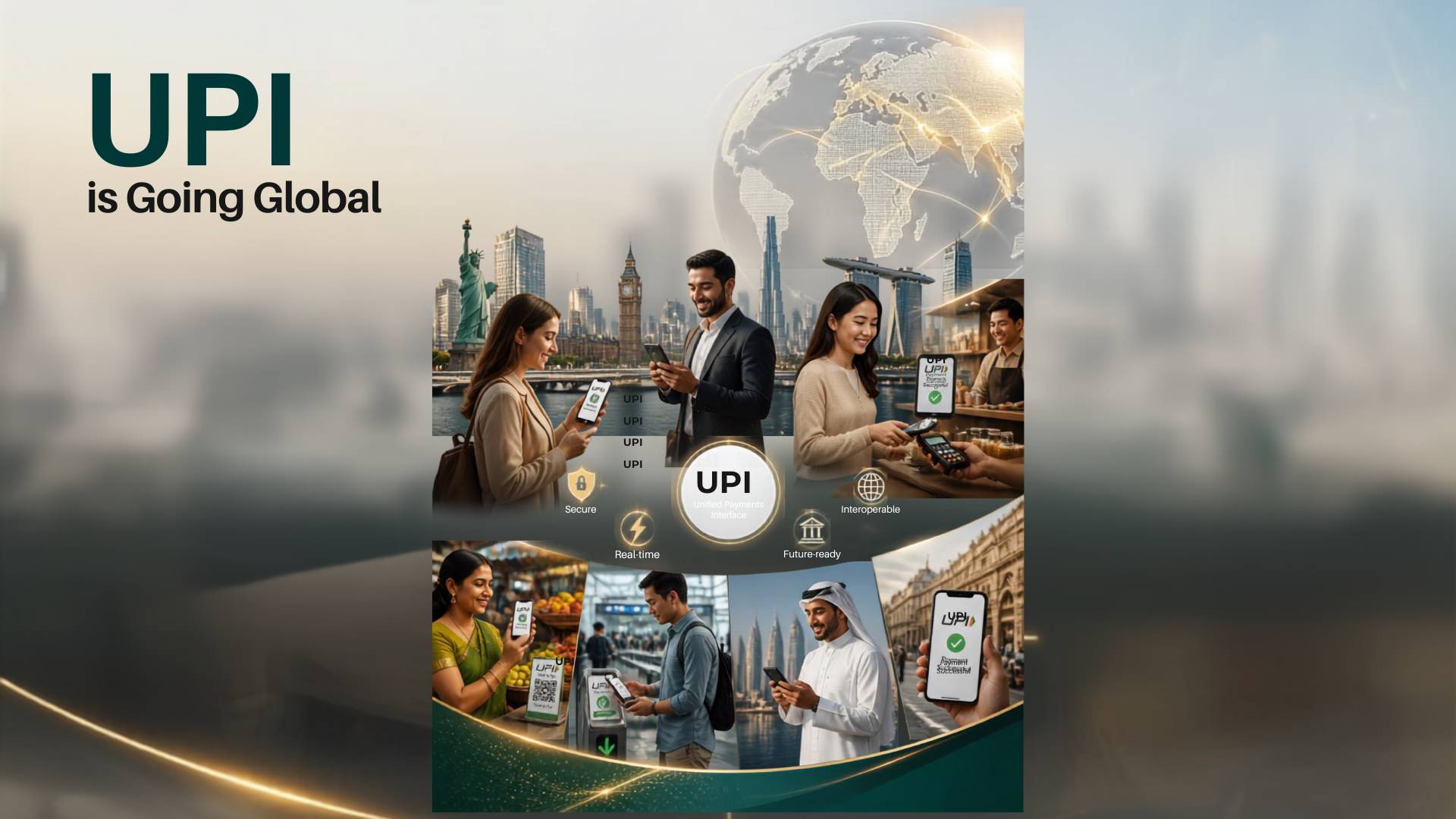
Everyone is talking about UPI going global, and for good reason. Nine countries, real-time settlement, QR codes accepted from Paris to Singapore. It is one of the most successful pieces of public payment infrastructure ever built, anywhere.
But almost every version of that story frames the next chapter the same way: as a connectivity problem. Link India’s rails to Singapore’s. Plug Nepal into the same standard. Get the systems talking to each other.

Having spent more than a decade building real-time cross-border payment infrastructure out of Europe, I can tell you: connectivity is the easy part. The technical handshake is rarely what breaks. What actually decides whether money moves across a border, instantly and at scale, is the regulatory layer underneath it. And almost nobody writes about it.
The stakes are not abstract
The global average cost of sending $200 across a border still sits at around 6.5%, according to the World Bank, more than double the 3% target the United Nations has set for 2030. And this is not a marginal flow. Remittances to low- and middle-income countries reached $685 billion in 2024, larger than foreign direct investment and official development assistance combined. India, the world’s largest recipient, sits at the centre of that map.
When a corridor stays slow and expensive, that is not an abstraction. It is rent, school fees and medicine arriving late, or arriving smaller.
Why domestic real-time payments are the exception, not the model
It is worth being honest about why UPI worked in the first place. It had one regulator, one rulebook and one settlement layer. Every participant answered to the same central bank. Liquidity sat inside a single domestic system. Compliance was one framework, applied once.
Under those conditions, instant settlement is not a miracle. It is the natural result of removing friction that never needed to be there.
Now take the same transaction and send it across a border, and every one of those advantages disappears. Picture a worker in the euro area sending money home to family in India. On the sending side, that payment sits under the EU’s PSD2 regime and the bloc’s anti-money-laundering rules. On the receiving side, it meets India’s Foreign Exchange Management Act and the Reserve Bank of India’s authorisation requirements. At every step, it must clear sanctions screening against more than one list.
Two regulators. Two rulebooks. Two different definitions of what a licensed institution even is. And funds must be pre-positioned on both ends, because “real-time” for the sender means someone, somewhere, is already holding the liquidity to pay out on the other side.
The QR code looks identical to the one that works at home. Everything underneath it has changed.
Gateways move data. The licence owns the risk.
There is a distinction the industry keeps collapsing, and it matters more than any product feature.
A payment gateway moves data. It encrypts, routes and authorises, but it never holds your money, and it carries no financial liability. A licensed institution is a different animal entirely. It onboards customers, holds funds before settlement, screens for sanctions and financial crime, and answers to the regulator for every unit of currency that moves.
When something goes wrong, the regulator does not care whose logo sits on the app. It cares whose name is on the licence.
That is the layer people forget to cost, and when it is treated as an afterthought, the bill arrives later, and larger. The failure mode is almost always the same: the fintech assumes its banking partner owns the compliance, the partner assumes the fintech does, and in practice nobody owns it. The industry has already seen what happens when ownership stays ambiguous. In 2017, one of the largest money-transfer operators in the world forfeited $586 million, at the time the largest penalty ever imposed on a money services business, after its anti-money-laundering programme failed to keep pace with the scale of the business built on top of it. The lesson: the ownership question needs to be answered and built in deliberately, not assumed. In that sense, ‘cheaper’ is often more expensive in the long run.
The way out is not heroic; it is structural. Put the obligation with a single licensed institution that carries the compliance for everyone plugged into it, and the question of who owns the risk stops being ambiguous.
What the UPI story actually teaches everyone else
The lesson of UPI is not that you should copy the rails. The standard is public; any market can adopt a QR specification. What made UPI work is far harder to replicate, because it was regulatory: a single accountable system, enforced by an institution willing to carry the risk.
Export that model across borders, and the hard part is not laying track between two countries. It is answering a far less glamorous set of questions. Who is licensed on each side? Who absorbs the compliance burden? Who holds the liquidity, so the money is already there when the code is scanned? Who is accountable when it fails?
Every real-time corridor that actually works answered those questions before going live. Every one that stalled quietly skipped them and hoped the technology would paper over the gap. It never does.
The next decade of cross-border payments will be won underneath the app
I say this as an operator, not a theorist. The app is not the moat; the infrastructure is. The regulated, compliant, liquidity-backed layer beneath the interface is what decides whether a cross-border payment settles in seconds or fails silently three days later.
I have little patience for the claim that instant global payments are “almost here” because the technology has arrived. The technology has been ready for a while. What is still being built, corridor by corridor, is the regulatory and settlement infrastructure that makes it safe to switch on.
This is already visible, not predicted. As new rulebooks land across the major markets, the advantage is shifting, from whoever can reach a rail to whoever can operate one under supervision. The rail that wins a corridor is turning out to be the one that clears compliance first and still reaches the last mile, not the one with the fastest demo.
So, it is worth naming the thing plainly. Real-time payments crossing borders is not a connectivity milestone. It is a licensing, compliance and liquidity problem wearing a connectivity costume. The markets that grasp this will build corridors that last. UPI did the hard part at home. Doing it across borders is a different kind of hard, and it tends to get solved in regulatory filings long before it gets announced in a press release.
Sources referenced: World Bank Remittance Prices Worldwide; UN SDG 10.c; World Bank Migration & Development Brief (2024 flows); US FTC / DOJ, Western Union settlement, January 2017.